
The right question is not "Does it stop every breach?" It is whether PastWipe™ can reduce the usable value of stolen or exfiltrated data for a defined data class, within a defined workflow, under measurable operating conditions, alongside your existing security tools.
A controlled evaluation is designed to answer that question with evidence.
How a controlled evaluation works
1. Scope
- Choose one or two priority data flows. Start with high-value data rather than everything.
- Identify expected users, systems and the consequences of unauthorised reuse.
- Agree success criteria before anything is deployed.
2. Conditions
- Confirm which identity, device, environment and attestation signals are available and trustworthy.
- Decide how online, offline, legacy and third-party dependencies will be handled.
- Define failure and recovery behaviour.
3. Deploy alongside your stack
- Integrate with existing identity, monitoring and key-management systems.
- Leave existing tools in place: nothing is ripped out or replaced.
4. Test against real scenarios
- Authorised use, attempted misuse and simulated exfiltration.
- A change in security state, and controlled restoration of legitimate access.
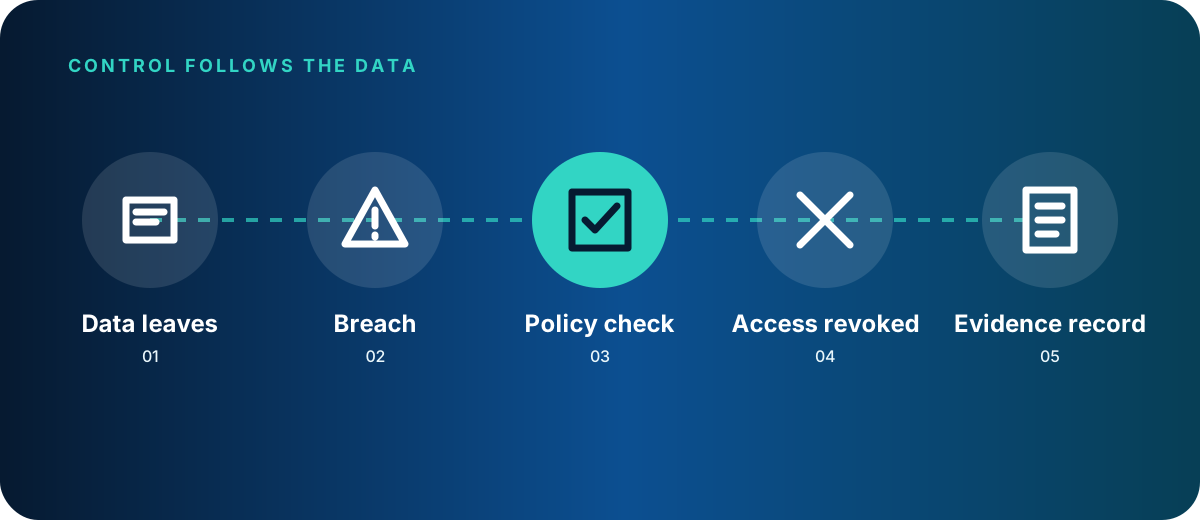
5. Evidence and review
- Allow, deny, restrict and degrade outcomes.
- False-positive and availability impact.
- Evidence records and a final evidence pack for security, legal, compliance and insurance review.
- An agreed recommendation on next steps.
Duration and commercial terms are agreed during scoping and depend on the data, workflow and integration involved.
What you need to bring
- A sponsor from security, and ideally from risk, legal or compliance
- One or two candidate data flows
- Access to test environments and the relevant identity and monitoring systems
What PastWipe will not claim
We will not promise that every breach can be stopped, or that every copy can be controlled. The evaluation measures what PastWipe achieves in your environment. See limitations
Start
Scope a controlled evaluation · Request an executive briefing